A few years ago, my uncle collapsed at a family dinner. Nobody the table knew what was happening. He was slurring his words, his face looked uneven when he tried to smile, and he kept saying his arm felt "asleep." We lost nearly 20 minutes trying to figure out if he was having a medical emergency before someone finally called 911. He survived, but his recovery was long and hard — and his doctors told us that those minutes made real difference in his outcome That experience changed how I think about stroke awareness put together this FAQ because I want other families to have the information we didn't. Knowing stroke symptoms isn't just useful trivia. It can save someone's life.
What are the most common warning signs of a stroke?
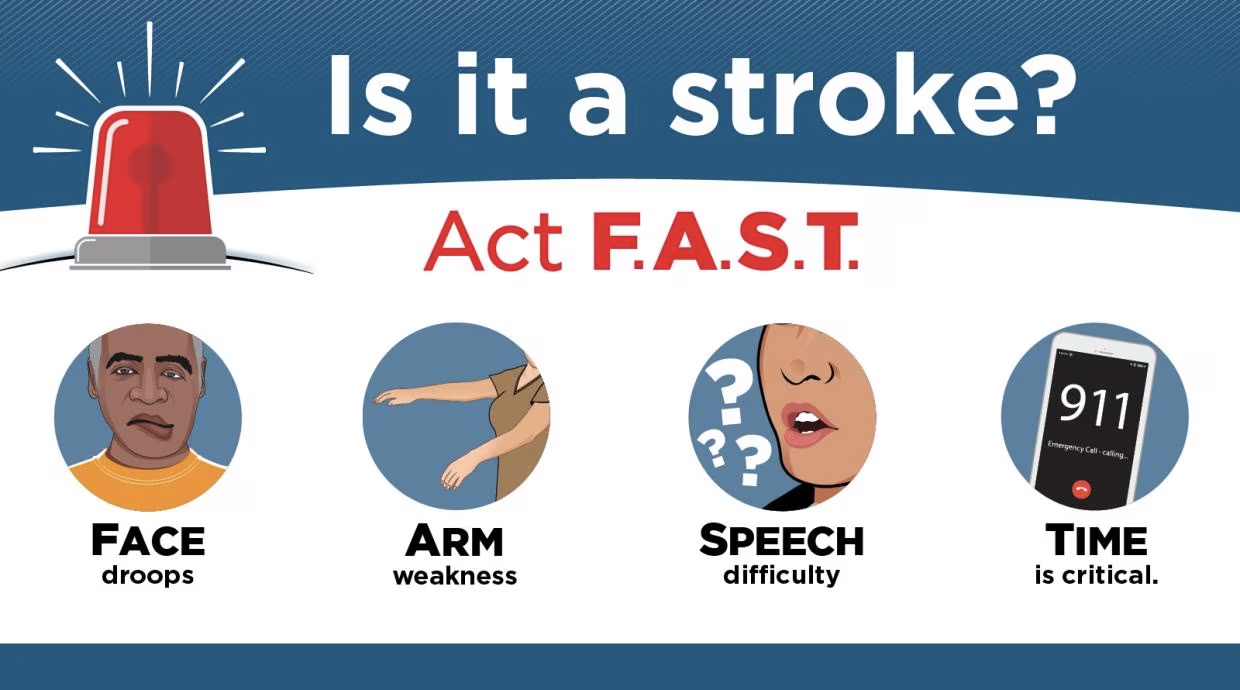
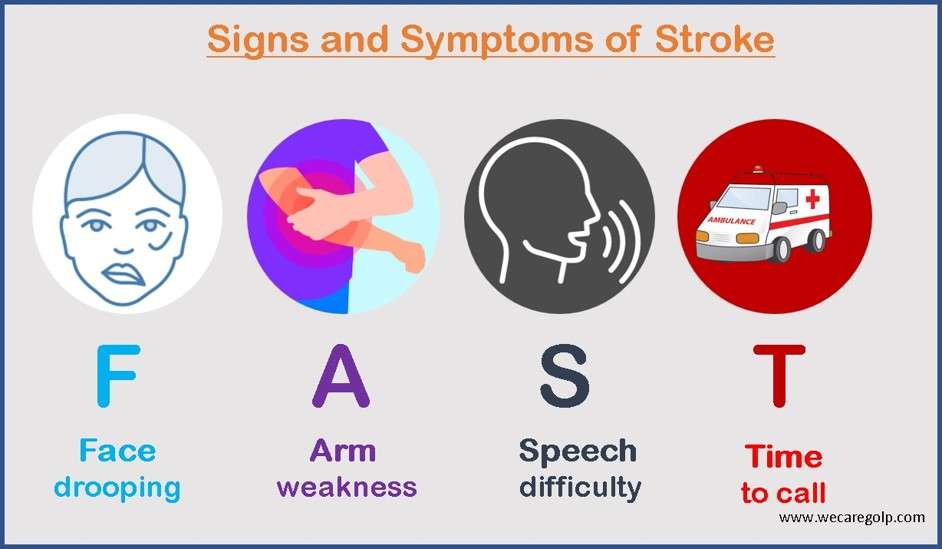
The easiest way to remember stroke symptoms is the acronym FAST: Face drooping, Arm weakness, Speech difficulty, and Time to call 911. In practice, face drooping means one side of the face lookseven or numb — ask person to smile and see if it looks lopsided. Arm weakness means arm drifts downward when the person tries to hold both arms up. Speech difficulty can sound like slurring, garbled words, or an inability to speak or understand what's being said. These three symptoms together are a major red flag. But can also show up as sudden severe headache with no obvious cause, sudden vision problems in one or both eyes, sudden dizziness or loss of balance, and sudden confusion Any of these, appearing suddenly and without warning, should be taken seriously.
How quickly do symptoms appear?
That word "sudden" is really key Stroke symptoms don't typically build gradually over hours or days. They come on fast often within seconds to a few minutes. That sudden onset is one of the main ways distinguish stroke from other conditions. Someone might be mid-sentence and then abruptly stop making sense. They might stand up from chair and immediately lose their balance. If you notice symptom appearing out of nowhere with no obvious trigger, that sudden quality itself is a warning sign. Don't wait to see if it passes on its own. The faster stroke is treated, the better the outcome saytime is brain" because brain cells begin dying within minutes of a blockage.
Can symptoms be mild or easy to dismiss?
Absolutely, and this is one of the most dangerous things about strokes. Not every comes in like a freight train. Sometimes the symptoms are subtle — slight slur that sounds like fatigue, a mild headache that feels like a normal tension headache, or a brief moment of confusion that seems distraction. There's also a condition called a TIA (transient ischemic attack), sometimes called a "mini-stroke," where symptoms appear then resolve within minutes to hours. People dismissIA because they feel fine afterward is serious mistake. A TIA is a major warning that full stroke may be coming, and it requires immediate medical evaluation. If anylike symptom appears and then disappears, still go to the emergency room. Don't letI feel better now" talk you out of getting help.
Are symptoms different women than men?
The core FAST symptoms apply everyone, but research has shown that women are more likely to experience some additional orypical symptoms that can make diagnosis trickier. Women having stroke may reportausea or vomiting, hiccups, general weakness fatigue, sudden behavioral changes, or even chest pain and shortness of breath. Because these symptoms overlap with other conditions, strokes in women are sometimes misdiagnosed or dismissed initially. Women also have some unique risk factors — including pregnancy, preeclampsia, hormonal contraceptive use, and migraines with aura — that increase risk. Being aware of atypical presentations especially important if you're a woman or if're caring for one.
What should I do the moment I suspect someone having a stroke?
Call 911 immediately. Don't drive them to the hospital yourself unless're told to — paramedics can begin assessment en route and alert hospital ahead of arrival, which can significantly cut down on treatment delays. While wait for the ambulance, keep the person calm and lying down with their head and shoulders slightly elevated. Don't give them food, water, or medication Note exact time symptoms started, because treatment decisions whether to use clot-busting drugs — depend heavily on that timeline. If the person is unconscious and not breathing, start CPR if you're trained. Stay the line with the911 operator and follow their instructions. Every second genuinely counts here>Who is most at risk for having a stroke?
Stroke can happen to anyone at any age, including children young adults, but risk increases significantly with age. People over 55 higher roughly doubles each decade after that. High blood pressure is single biggest controllable risk factor — it's involved in nearly half of all strokes. Other risk factors include diabetes, high cholesterol, smoking, atrial fibrillation (an irregular heart rhythm), obesity, physical inactivity, heavy alcohol use, and a history of prior stroke or TIA. Family history matters too. If your parent or sibling had a stroke, your own risk is. The encouraging news is that up to 80 percent of strokes are considered preventable through lifestyle changes and proper management of underlying conditions.
What's the difference between a stroke and a brain aneurysm?
These are related but distinct. Anischemic stroke — most common type, accounting for about 87 percent of strokes — happens when a blood clot blocks an artery in the brain, cutting off blood flow. A hemorrhagic stroke happens when a blood vessel in the brain bursts, causing bleeding. A aneurysm is a bulge or ballooning in blood vessel wall. aneurysm itself doesn't always cause symptoms, but if it ruptures, it causes a type of hemorrhagic stroke. The hallmark symptom of aruptured aneurysm is a sudden, catastrophic headache — often described as "the worst headache of my life" — sometimes accompanied by stiff neck, light sensitivity, nausea, or of consciousness. Any headache fitting description needs emergency care immediately symptoms of a ruptured aneurysm and a hemorrhagic stroke overlap significantly, which is why both require same urgent response>How can I reduce my own risk of having
The lifestyle factors that protect cardiovascular system generally protect your brain too. Controlling the top of the list — you don't know your numbers, find out. Eat a diet limits sodium, saturated fat, and added sugars while prioritizing vegetables fruits, whole grains, and lean proteins. Exercise regularly, even moderate walking makes a measurable difference. If you smoke, quitting is one of the highest-impact you can make. Limit alcohol. Manage existing like diabetes, high cholesterol, or atrial fibrillation in close partnership with your doctor. And don't skip regular checkups — many factors are silent and can only be caught through screening. Building habits isn't about being perfect It's about consistently lowering your odds time, and that effort is absolutely worth making.