With respiratory illnesses circulating year-round, it can be genuinely hard to tell whether you're dealing with COVID-19 or the flu. Both conditions share a lot of overlapping symptoms, and both can range from mild to serious. This FAQ breaks down the key differences, warning signs, and practical guidance to help you figure out what you might be dealing with and when to seek care.
What are the most common symptoms of COVID-19?
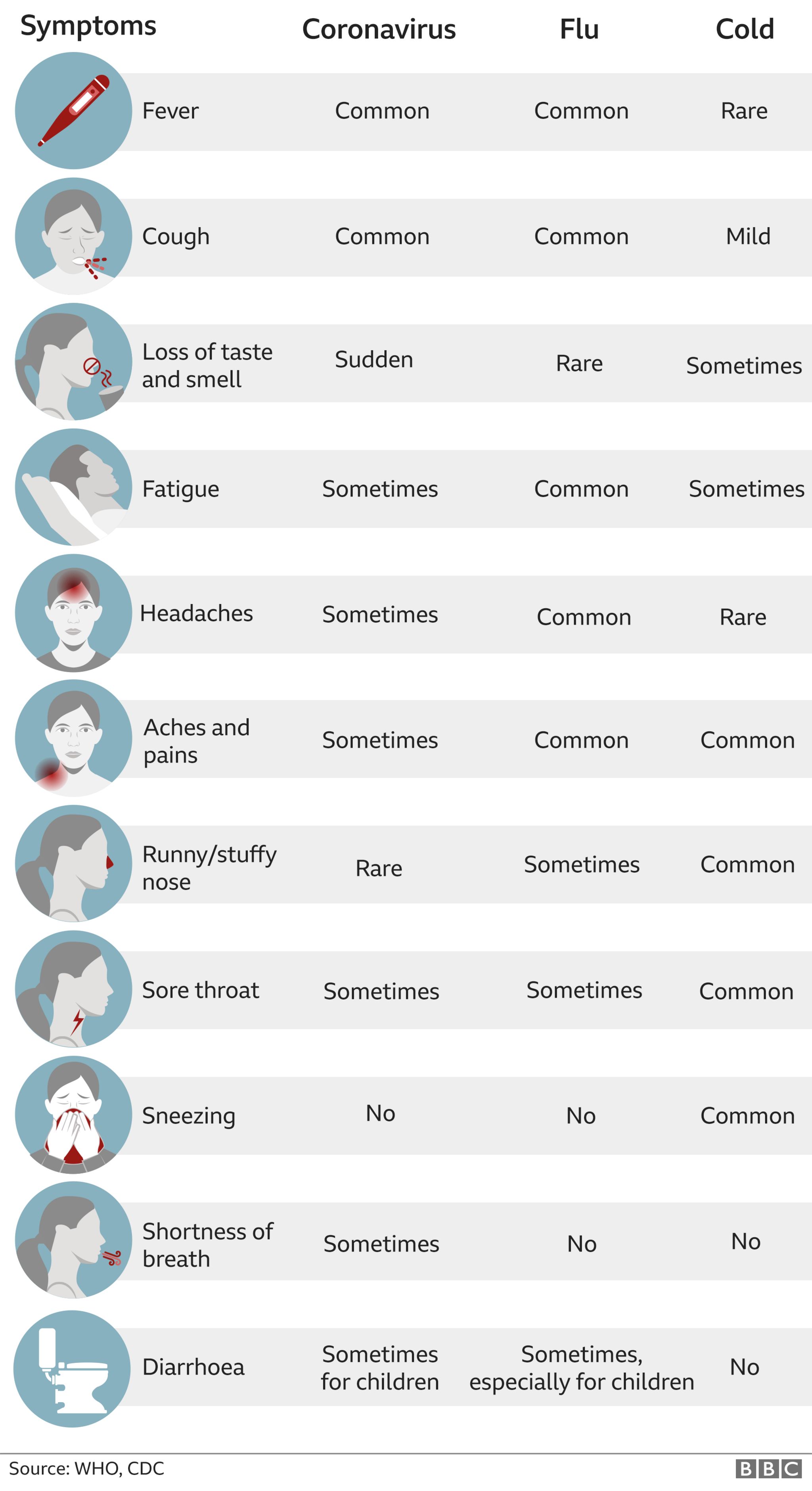
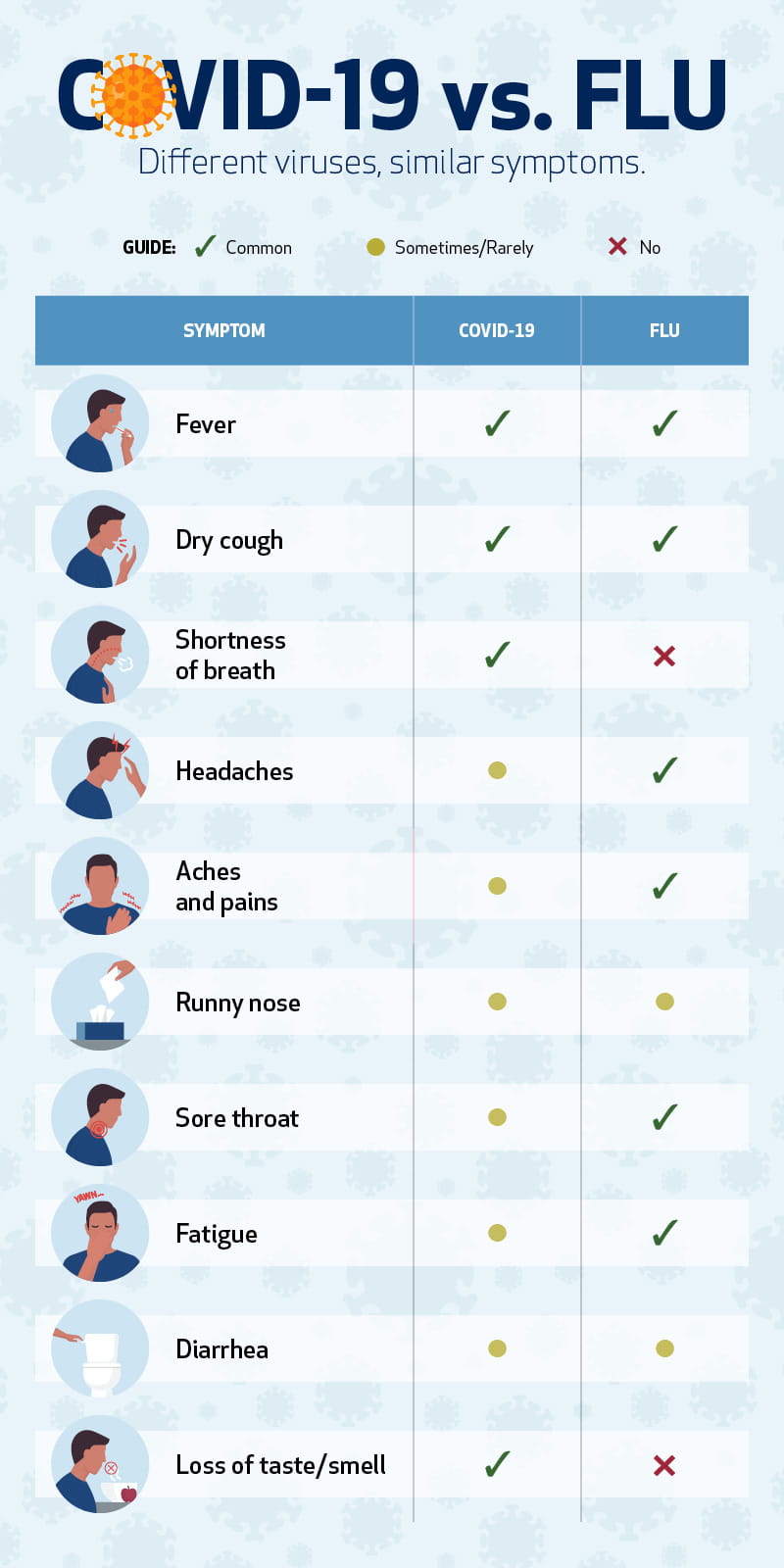
COVID-19 symptoms can vary quite a bit depending on the variant and the individual, but the most frequently reported ones include fever or chills, cough, shortness of breath, fatigue, muscle body aches, headache, sore throat, runny or congested nose, nausea or vomiting, and diarrhea. One symptom that became closely associated with earlier COVID-19 variants is the sudden loss of taste or smell, known medically as anosmia. While this has been reported less frequently with newer variants, it can still occur. Symptoms typically appear two to fourteen days after exposure to the virus.
What are the most common symptoms of the flu?
Influenza tends to come on fast and hard Most people describe feeling fine one hour completely run down the next. Common flu symptoms include a high fever, severe muscle aches, chills, headache, fatigue, dry cough, sore throat, and nasal congestion. Gastrointestinal symptoms like vomiting and diarrhea are less common in adults with the flu but are more frequently seen in children. The rapid onset of symptoms is one of the hallmarks that distinguishes the flu from other respiratory illnesses.
How can I tell the difference between COVID-19 and the
This is one of the trickiest questions because many of the symptoms genuinely overlap. Both-19 and the flu cause fever, cough, fatigue, and body aches. However, a few distinctions can offer clues. Loss of taste or smell, while less common now, still points more toward COVID-19 than the flu. COVID-19 symptoms also tend to develop gradually, while flu symptoms often hit suddenly. Shortness of breath is reported more often with COVID-19. That said, the only reliable way to know for certain is to get tested, since symptoms alone are not definitive.
When do symptoms start after exposure?
For flu, the incubation period is usually to four days, with people becoming symptomatic about two days after exposure. For COVID-19, symptoms generally within two to fourteen days of exposure, with an average of around five days. Because of this longer window, COVID-19 can spread more easily before person realizes they are sick. This difference in incubation periods is an important reason why COVID-19 has been harder to contain through isolation alone.
Are some more serious than others?
Yes, recognizing serious symptoms is important for knowing when to seek emergency care. For COVID-19 and the flu, signs that require immediate medical attention include difficulty breathing or shortness of breath, persistent chest pain or pressure, confusion or inability to stay awake, bluish lips or face, and severe or persistent vomiting. In children, additional red flags include fast breathing, extreme irritability, a rash combined with fever, and not urinating as frequently as usual. Do not wait to see if these symptoms resolve on their own.Can experience different symptoms than adults?
Children generally milder illness from COVID-19 and the flu compared to older adults, but they not immune to serious complications. With-19, a rare but serious condition called Multisystem Inflammatory Syndrome in Children, MIS-C, can develop weeks after infection causing inflammation in multiple organs Symptoms of MIS-C include prolonged fever, abdominal pain, vomiting, diarrhea, rash, red eyes, and extreme fatigue. With the flu, children under especially those under two, are at higher risk for complications including pneumonia and febrile seizures. Any severe or unusual symptoms in a child should be evaluated by a healthcare provider>How long do symptoms usually last?
Flu symptoms typically last one to two, though fatigue and cough can linger a bit longer. Most otherwise healthy adults recover within seven to ten days. COVID-19 recovery timelines are more variable. Mild cases often resolve within one to two weeks, similar to the flu. However, some people experienceed symptoms, a condition commonly referred to as Long COVID or post-COVID conditions can involve ongoing fatigue, brain fog, shortness of breath, and other symptoms persisting for weeks or months after the initial infection Long COVID has been less commonly documented as a post-flu complication, which is one of the distinguishing factors between the two ill2>Should I get tested if I have symptoms?
Testing is strongly recommended whenever you develop symptoms, especially if you have been exposed to someone with a confirmed illness live someone who is high-risk, or work in a healthcare communal setting. At-home COVID-19 rapid antigen tests are widely available and provide results quickly. However, a negative rapid test does not completely rule out COVID-19, especially early in the illness when viral load may be low. PCR tests are more sensitive and can be ordered by a healthcare provider. Flu tests are also available at clinics and urgent care facilities. Knowing what you have helps guide treatment decisions and prevents you from unknowingly spreading illness to others.
Is there available for COVID-19 and the flu?
Bothnesses have antiviral treatment options, but they work best when started early. For flu, antiviral medications like oseltamivir, known as Tamiflu, can shorten the duration of illness and reduce the risk of complications, particularly for high-risk individuals. These effective when started within forty-eight hours of symptom onset. For COVID-19, antiviral treatments such as nirmatrelvir-ritonavir, often known by the brand name Paxlovid, are available for people at high risk of severe illness and should also be started within first few days of symptoms. For both conditions, supportive care including rest, fluids, and fever-reducing medications remains important part of recovery Always consult a healthcare provider to determine which treatment option, if any, is appropriate for your situation>Can vaccines help prevent COVID-19 and the flu?Yes, and staying current vaccines is one of the most effective ways to protect yourself and those around you. Annual vaccines are recommended for everyone six months and older, as influenza virus changes season to season and vaccines are updated accordingly. COVID-19 vaccines are also updated periodically to better target circulating variants. While neither vaccine guarantees you will not get sick, both significantly reduce the risk of severe illness, hospitalization, and death. Vaccination is especially important for older people with chronic health conditions, pregnant individuals, and young all of whom face greater risks from complications either virus