Liver Disease Symptoms Explained: Your Nhs-Guided Faq On What To Watch For
When I first started learning about liver disease, I was surprised by how many of the early signs I had overlooked or written off as something less serious. The liver is one of the hardest-working organs in your body, and when it starts struggling, it sends signals that are easy to miss or misattribute. Drawing guidance from NHS UK, I've put together this personal FAQ to help you understand the key symptoms, when to be concerned, and what steps to take next. Whether you're researching for yourself or a loved one, I hope this makes the information feel a little more approachable.
What are the most common early symptoms of liver disease?
In my experience reading through guidance, one of the most important things to understand is that liver disease often doesn't cause obvious symptoms in its early stages. When do appear, they tend to be vague and easy to dismiss. These can include feeling unusually tired or fatigued, losing your appetite, feeling nauseous, and experiencing some mild discomfort or pain in the upper right side of your abdomen. You might also notice unexpected weight loss. Because these symptoms overlap with so many other conditions, people often don't connect them to their liver right away, which is why awareness matters so much.
What does jaundice look like and why does it happen?
Jaundice is one of the more recognizable signs of liver disease, and it's something NHS highlights as a key warning sign. It causes the skin and the whites of the eyes to turn yellow. This happens because damaged liver can't process bilirubin, a yellow substance produced red blood cells break down, as efficiently as it should. The bilirubin then builds up in the blood and deposits in the skin and eyes When first read about this, I realized how striking it must be in person, and it's definitely symptom that should prompt an immediate visit to your GP.
Can liver disease cause skin changes beyond jaundice?
Yes, and this genuinely surprised me. According to NHS information, liver disease can cause a range of skinrelated symptoms Intense itching, known medically as pruritus, is a common complaint and happens because bile salts accumulate under the skin when the liver isn't functioning properly. You might also notice spidergiomas, which are small, spider-shaped clusters of blood vessels near the surface of the skin. Some people develop palmar erythema, a reddening of the palms. These changes are worth taking seriously and discussing with a healthcare professional.
Is swelling in the stomach sign of liver disease?
It absolutely be. The NHS describes condition called ascites, where fluid builds up in the abdomen, causing noticeable swelling and bloating. This occurs damaged liver can't produce enough albumin, a protein that helps keep fluid in the blood vessels. When albumin levels drop, fluid leaks into the surrounding tissues and abdominal cavity. Ascites often indicates advanced liver disease such as cirrhosis, so if you notice your abdomen becoming increasingly swollen or distended without obvious cause, getting it checked out quickly is really important.
What does liver disease do to your urine and stools?
This is one of those questions I've seen many people feel awkward asking, but's genuinely useful information. The NHS notes that liver disease can cause dark, tea-colored urine, which happens because excess bilirubin is excreted through the kidneys. On the other side of things, stools can become pale, grey, or clay-colored because isn't flowing properly from the liver into the digestive system. These changes in bathroom habits can feel alarming, but they're valuable diagnostic clues. If you notice both dark urine and pale stools together, that combination is a strong reason to see a doctor promptly.
Can liver disease affect how you think or feel mentally?
This caught me off guard when I first came across it. A serious complication of advanced liver disease is something called hepatic encephalopathy. The NHS explains that when the liver can longer filter toxins from the blood effectively, those toxins can travel to the brain and affect functions Symptoms can range from mild confusion, forgetfulness, and difficulty concentrating to more severe problems like disorientation, slurred speech, and in cases, loss of consciousness. If someone you know with liver disease seemsually confused or is acting out of character, it's a medical situation that needs attention right away.
Are there symptoms specific to alcoholic liver disease?
Alcoholic liver disease follows a progression and the NHS outlines how tend to develop in stages. In the early stage, fatty there are often no symptoms at all, which is part of what makes it so easy to ignore. As it progresses to alcoholic hepatitis, symptoms likeausea, vomiting, abdominal pain, fever, and jaundice can appear. If disease advances to cirrhosis, you'll see many serious symptoms discussed here including ascites, easy bruising, swollen ankles, and confusion. One thing that stood out to me is that people can still develop cirrhosis even if they stop drinking, depending on how much damage has already been done.
When should I actually go to the doctor about these symptoms?
Based on NHS guidance, I'd say answer is: sooner rather than later. If you're experiencing persistent fatigue, unexplained weight loss, jaundice, or a combination mentioned, book an appointment with your GP as soon as you can. The NHS encourages people not to wait and if these resolve their own, especially if you have known risk factors like heavy use, obesity, a family history of liver disease, or conditions type 2 diabetes. Blood tests, imaging, and sometimes liver biopsy are used to diagnose and assess disease, and catching it early genuinely makes a difference to treatment outcomes. Your GP is the right first point of contact, and you shouldn't feel embarrassed or hesitant to bring up these concerns.
Can disease be present without any symptoms at all?
Unfortunately, yes. This is one of the most challenging aspects of liver disease, and the NHS is clear about. The liver has remarkable ability to keep functioning even when significantly damaged, which means people live with liver disease for years without realizing it. Conditions like non-alcoholic fatty liver disease (NAFLD) are often discovered incidentally during routine blood tests or scans done for another reason entirely is why attending your NHS health checks especially if you're higher-risk group, is so valuable. Don't wait symptoms to appear before thinking about your health, by time symptoms do show up, the disease may already be at an advanced stage.
ダンボール 自販機設計図, 段ボールで自動販売機を作る – PTDLC
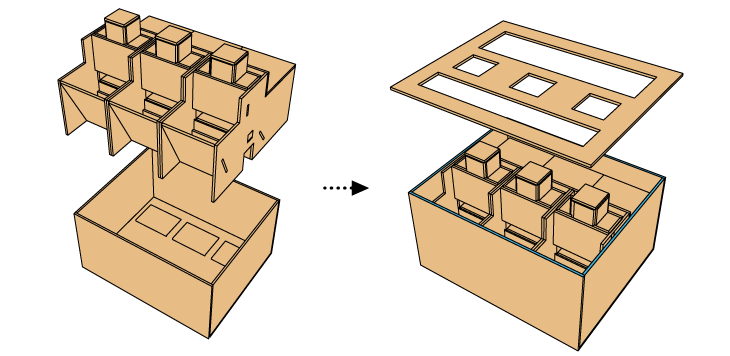
ダンボール 自販機設計図, 段ボールで自動販売機を作る – PTDLC
ダンボール自動販売機 | ダンボール工作レシピ | Hacomo株式会社
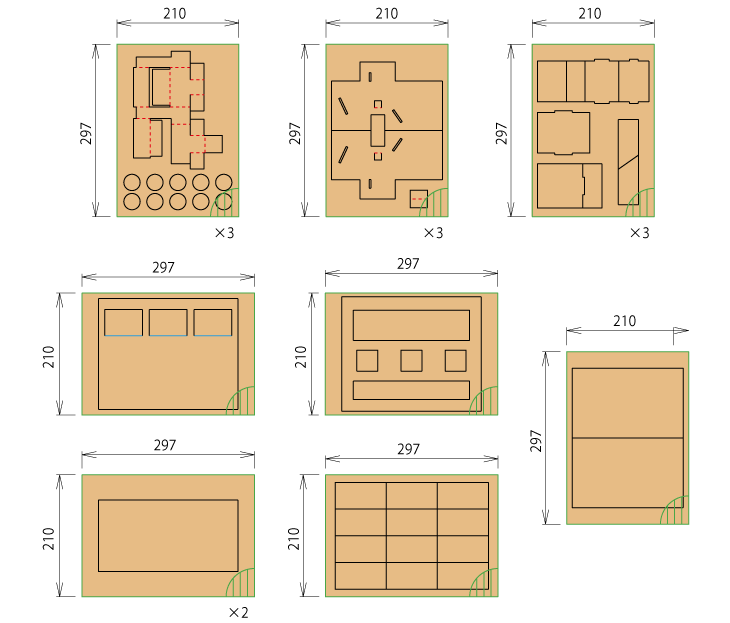
ダンボール自動販売機 | ダンボール工作レシピ | hacomo株式会社
ダンボール自動販売機 | ダンボール工作レシピ | Hacomo株式会社
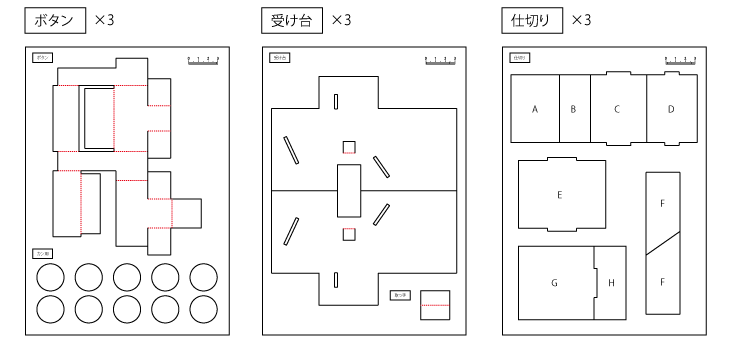
ダンボール自動販売機 | ダンボール工作レシピ | hacomo株式会社